UK and EU Food Labelling Standards
Food packaging in the UK follows standardised labelling regulations requiring declaration of nutritional information, allergen contents, and serving sizes. The Food Information Regulations (FIR) establish mandatory information requirements for packaged foods sold to consumers. These regulations ensure transparency and enable consumers to access standardised nutritional data across products.
Nutritional panels display values per 100g or 100ml alongside values per stated serving. Serving sizes are established by manufacturers based on typical consumption amounts for each product category. These declared servings represent manufacturers' estimates of average portion sizes, not individualised recommendations or optimal amounts for any specific person.
UK labelling distinguishes between reference values and serving sizes. Reference values (previously called Reference Intake or RI) represent average daily requirements across populations, while serving sizes indicate typical consumed amounts. This distinction remains important for understanding the context and application of nutritional information displayed on packaging.
Serving Size Declarations Across Product Categories
Serving sizes vary substantially across different food categories reflecting typical consumption patterns. For example, a breakfast cereal serving might be listed as 30g, pasta as 75-100g cooked weight, and chocolate as 30g per serving. These declarations represent estimates of typical single-occasion consumption amounts documented across consumer behaviour studies.
Manufacturers have discretion within industry guidelines in setting declared serving sizes. This flexibility results in variation across brands of similar products. Two competing breakfast cereals may declare different serving sizes, affecting how their nutritional profiles appear on labelling. This variation requires active attention from consumers comparing products across brands and categories.
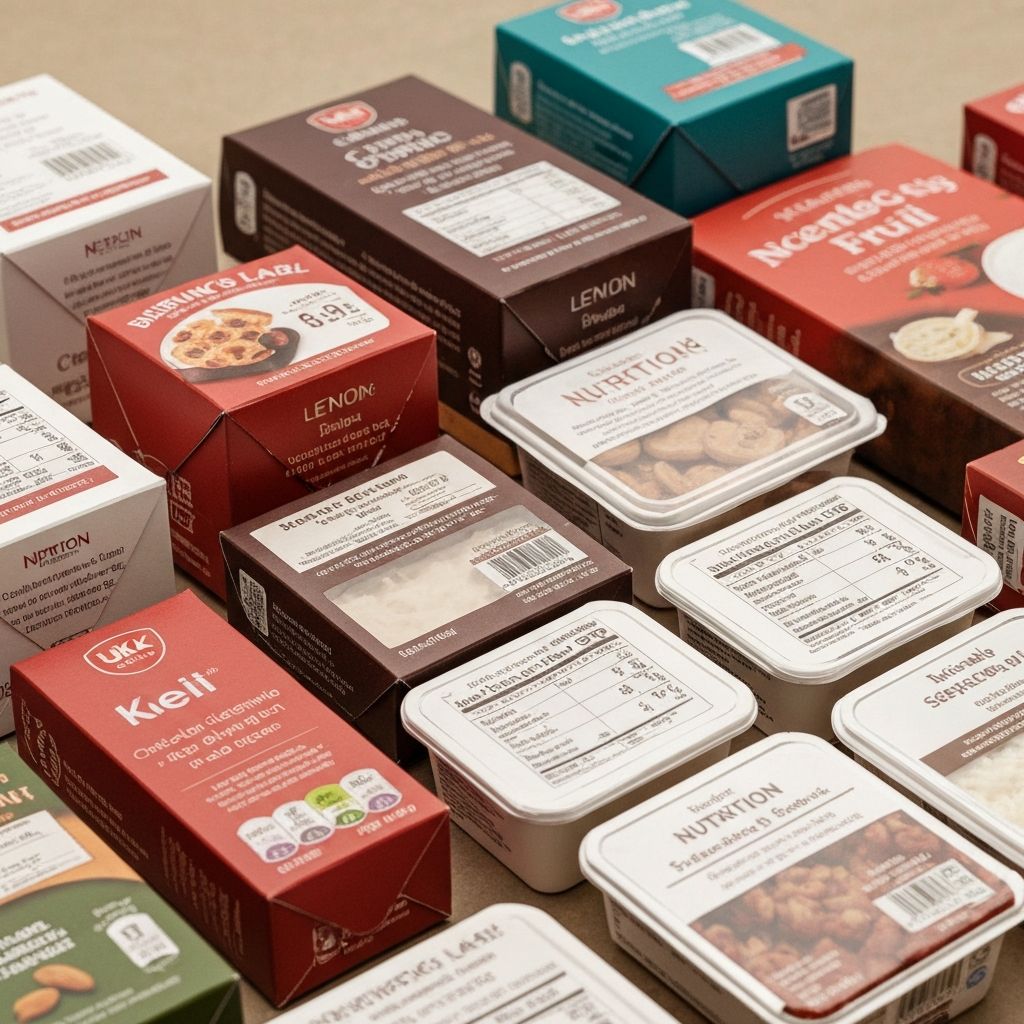
Portion sizes differ from serving sizes. Nutritional information provides per-serving values based on declared serving sizes, while actual consumed amounts frequently differ. Understanding these distinctions clarifies important context for interpreting nutritional information. Packages containing multiple servings require calculation to determine nutritional content of actual consumed amounts if intake differs from declared serving size.
Packaging Design and Serving Influence
Package size, portion visibility, and design elements influence consumer perception of appropriate serving amounts. Smaller individual packages (such as snack-size portions) establish different consumption expectations compared to bulk packaging requiring portion division. These packaging choices reflect deliberate applications of portion design affecting consumer behaviour and consumption patterns.
Visual prominence of serving information varies across packaging designs. Some packages highlight serving sizes prominently on front labels, while others position this information primarily on nutrition panels. Marketing imagery, portion illustrations, and visual cues affect expectations about appropriate serving amounts beyond what textual labelling communicates.
Package capacity frequently does not align with nutritional serving sizes. A single-serve chocolate bar might contain 1.5 servings, while a biscuit package might contain 8-10 servings. These disconnects between package size and nutritional servings contribute to divergence between consumed amounts and declared serving information.
Gap Between Declared and Typical Servings
Research consistently documents that typical UK consumption amounts exceed declared serving sizes across most food categories. Restaurant portions substantially exceed packaged serving sizes, takeaway meals double or triple standard servings, and home-cooked meals frequently surpass packaging declarations. This divergence remains systematic rather than occasional.
Several factors contribute to serving divergence. Social norms around meal sizing, portion traditions, appetite variation, and practical preparation methods all influence actual consumed amounts independent of packaging information. Prepared meal sizes often reflect practical cooking units (one package, one container) rather than optimised serving divisions.
Individual portion variation reflects legitimate circumstances including different energy needs, appetite variation, meal context, and personal preferences. The gap between declared and consumed servings does not indicate incorrect behaviour but rather documents existing diversity in eating patterns across populations. Understanding actual consumption patterns provides factual context for portion awareness without implying any specific consumption pattern represents appropriate or correct practice.
Informational Context Without Prescription
Knowledge of UK food labelling standards and serving size declarations provides educational context for understanding nutrition information and consumption patterns. Standardised labelling enables comparison and informed consumer choices. Awareness of how serving information relates to actual consumption patterns provides factual perspective on eating behaviour.
This informational understanding remains distinct from prescriptive guidance about appropriate serving amounts. Declared serving sizes represent statistical averages applicable to reference populations, not individualised recommendations for any specific person. Individual choices regarding portion amounts remain entirely personal decisions based on personal circumstances, preferences, and requirements.
Consulting packaging information to understand nutritional content and ingredient composition provides valuable educational perspective. Using this information to guide personal dietary choices represents individual decision-making reflecting personal values and circumstances rather than following prescribed guidance. Different individuals reasonably make different choices regarding portion amounts and consumption patterns.
Continue Exploring Portion Concepts
Return to articles to explore additional aspects of serving sizes, packaging practices, and consumption patterns.
Back to Articles