Misconception 1: Serving Sizes Apply Universally
Clarification: Standard serving sizes published on packaging and in nutritional guidelines represent statistical averages for reference populations, not individually appropriate amounts. No universal serving size applies appropriately across all individuals regardless of their personal circumstances, energy requirements, age, activity level, or health status.
Declared serving sizes exist to standardise nutritional information, enabling comparison across products. This standardisation requirement does not imply that these amounts represent appropriate intake for any specific individual. A serving size appropriate for a sedentary older adult differs substantially from appropriate amounts for an active young adult engaged in physical training, though both may be the same age and body size.
Understanding that servings represent statistical references rather than universal standards provides important context for interpreting nutritional information. Different individuals appropriately consume different amounts based on their individual circumstances. This diversity reflects physiological reality rather than behavioural deviation from any standard.
Misconception 2: Serving Sizes Equal Recommended Amounts
Clarification: Serving size (a standardised reference) differs fundamentally from recommended intake (individualised guidance). Packaging serving sizes do not represent recommendations of appropriate consumption amounts. These distinctions remain important despite frequent confusion conflating these distinct concepts.
Nutritional guidelines published by health authorities provide population-level guidance reflecting average needs across reference groups. These guidelines represent starting points for individual assessment, not universal prescriptions. Individual assessment considering personal characteristics provides more accurate guidance than applying population averages directly to individuals.
Media communication frequently blurs these distinctions, presenting serving size information as if it represented recommendations. This imprecision contributes to misunderstanding about what nutritional information actually conveys. Recognising these technical distinctions clarifies what serving information actually means and appropriate interpretation of labelling information.
Misconception 3: Portion Awareness Automatically Changes Behaviour
Clarification: Awareness of portion sizes and serving information does not automatically produce any specific behaviour change. Information and behaviour remain distinct phenomena. Knowledge about serving sizes provides context for understanding eating patterns without necessarily influencing actual choices, which depend on numerous other factors beyond awareness.
Individual responses to portion information vary considerably. Some individuals modify choices based on nutritional information, while others demonstrate minimal change despite equivalent awareness. Motivation, values, circumstances, preferences, and numerous other factors beyond information availability influence whether awareness translates to behaviour change. No direct causal path links portion awareness to any specific behaviour.
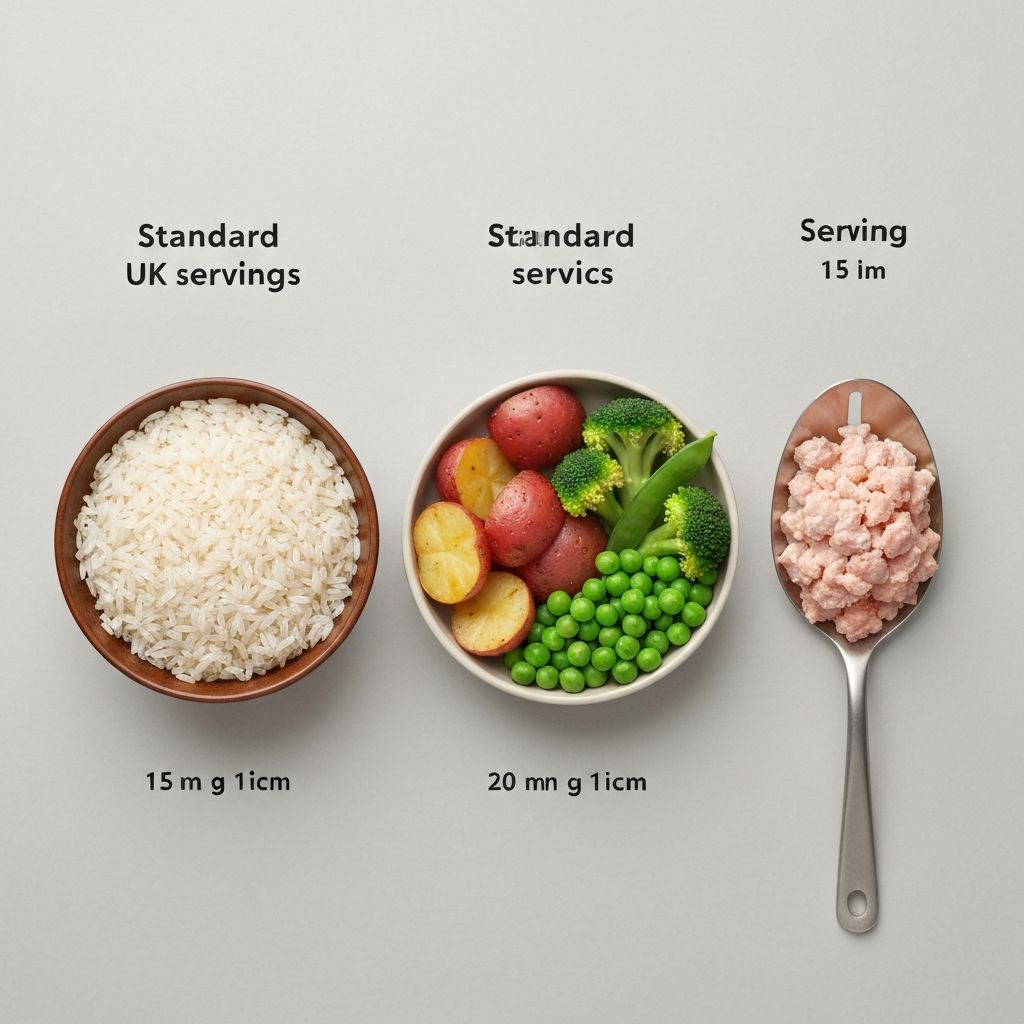
This educational resource provides information about portion concepts without implying any specific behavioural outcome. Awareness represents one input among many influencing choices. Individual freedom to choose remains fundamental, with different individuals reasonably making different choices about portion amounts reflecting their personal values and circumstances.
Misconception 4: Weight and Portion Size Always Correlate
Clarification: Portion size (volume or plate space) differs from weight, and neither directly predicts body weight outcomes. Different foods have dramatically different weights relative to volume. A portion of pasta and a portion of oil have vastly different weights despite potentially occupying similar space. This distinction means that weight-based recommendations and volume-based visual portions represent different measurement systems.
Body weight reflects complex interactions between energy intake, expenditure, metabolism, genetics, health status, and numerous other factors. No simple linear relationship exists between portion size and body weight. Identical portions produce different results across individuals due to genetic variation, metabolic differences, and individual circumstances. This complex relationship means simple portion guidance cannot predict or control body weight outcomes.
Misunderstanding this complexity leads to unsupported claims about portion-related health effects. This educational resource provides factual information about portion concepts without implying any outcomes or attempting to control body weight through portion manipulation. Individual health outcomes remain determined by numerous factors beyond serving choices.
Misconception 5: Standard Servings Reflect Healthy Amounts
Clarification: Serving size and healthfulness represent distinct concepts. A standardised serving size does not carry inherent health implications. Foods with identical serving sizes can differ dramatically in nutritional quality, and health outcomes do not depend on conforming to serving sizes but on overall dietary patterns, lifestyle factors, and individual circumstances.
Health depends on numerous factors including overall diet quality, physical activity, sleep, stress management, social connections, medical care, and genetics. No single component like portion size determines health outcomes. Appropriate portion amounts for any individual depend on that individual's specific circumstances, preferences, and requirements rather than conforming to any universal standard.
Claims linking portion control to health improvements require scrutiny. Individual responses to dietary changes vary substantially. What benefits one person may prove ineffective or counterproductive for another. This complexity means that universal health guidance based on portion size alone lacks scientific support. Individual circumstances and professional guidance provide more appropriate foundations for personal decisions.
Practical Interpretation Without Prescription
Clarifying these misconceptions provides educational context for accurate interpretation of portion-related information without prescribing any specific eating behaviour. Understanding what serving sizes actually represent enables more accurate interpretation of nutritional labels and guidelines. Recognising that averages do not apply universally prevents inappropriate self-criticism or assumption that deviations from standards represent errors.
This informational approach differs fundamentally from behavioural guidance or outcome promises. The facts that serving sizes represent statistical averages, individual requirements vary substantially, and awareness does not automatically determine behaviour all support a fundamental principle: individual circumstances and choices remain paramount for appropriate personal decisions.
Misunderstandings about serving sizes and portion concepts contribute to confusion about nutrition, eating, and body-related topics. Clarifying these misconceptions reduces such confusion and enables more accurate interpretation of nutrition information. Individual choices about eating remain personal decisions reflecting personal values, circumstances, and preferences rather than attempts to conform to universal standards or achieve promised outcomes.
Continue Exploring Portion Concepts
Return to articles to explore additional aspects of serving sizes, portion awareness, and eating patterns.
Back to Articles